
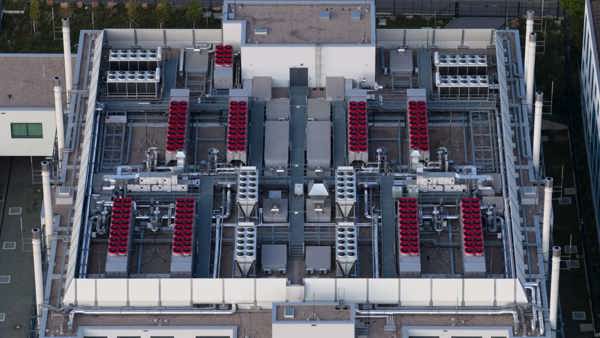
Data centers have become one of the fastest-growing segments of the commercial HVAC market. Bloomberg reports that six of the largest U.S. hyperscalers plan to spend more than $593 billion in 2026, a 45% increase over a record spend in 2025. As organizations expand their digital infrastructure, so does the demand for reliable cooling systems alongside it.
For HVAC OEMs, that growth creates new opportunities, but it also introduces new manufacturing, sourcing, and supply chain challenges. Tight launch schedules, evolving designs, continuous operating requirements, and complex supply chains all place added pressure on manufacturers and their suppliers.
At Timco, we've spent decades supplying custom rubber and plastic components for commercial and residential HVAC applications. In this post, we’ll break down some of the core challenges facing data center HVAC systems and how to address them.
What HVAC Companies Must Address When Sourcing Data Center HVAC Components
When people think about data center cooling, they often focus on the equipment itself. However, every cooling system depends on dozens of individual components working together reliably, and it takes more than choosing standard parts to ensure success.
Supporting Equipment That Must Operate Continuously
Unlike other commercial and residential HVAC units, data center cooling systems don’t get to take a break. These units often run nonstop to manage the constant heat generated by servers and other equipment. Reliable uptime is a must to support critical infrastructure, which means they require dependable parts such as:
- Condensate drainage tubing
- Rubber seals and gaskets
- Through-wall grommets
- Panel seals
- Vibration isolation components
- Custom extrusions
While each part may seem relatively small compared to the whole system, a single failed component can lead to costly unplanned downtime. Selecting appropriate materials, designing components for the application, and maintaining consistent quality all become important considerations when supporting systems expected to operate around the clock.
Tight Timelines Leave Little Room for Delays
One of the biggest challenges surrounding today's data center HVAC projects is the sheer speed at which projects move.
As demand for new facilities continues to grow, HVAC manufacturers are often working under aggressive production schedules with little flexibility in delivery dates. At the same time, product development continues to evolve as designs are refined. That combination creates a difficult reality:
- Deadlines stay the same.
- Designs continue to change.
- Components still need to be sourced, manufactured, validated, and delivered on schedule.
A supplier that cannot respond quickly to revised drawings, changing dimensions, or updated requirements can quickly become a bottleneck. Responsive communication, flexible manufacturing options, and collaborative project management become just as valuable as competitive pricing.
Design Changes Throughout Development
Custom HVAC equipment rarely moves from concept to production without revisions. As engineers refine layouts, routing paths, connection points, and installation requirements, custom components often evolve as well.
Something as simple as adjusting the length of a tube or changing the angle of a fitting can affect manufacturing methods, tooling, lead times, and assembly processes. Managing those revisions requires suppliers who understand how seemingly small design changes can affect the entire project.
Rather than treating every revision as a completely new project, experienced suppliers can help customers evaluate the impact of design changes, recommend practical alternatives, and keep development moving forward whenever possible.
Material Selection Is More Than Choosing a Rubber Compound
Every HVAC application presents its own set of operating conditions. Selecting the right material involves understanding how each part functions within the larger assembly. Components may need to withstand:
- Continuous temperature exposure
- Outdoor environmental conditions
- Moisture and condensate
- Vibration
- Flexible routing requirements
- Rigid connection points
Selecting the right material involves understanding how each component functions within the larger assembly. For example, one condensate management assembly may require flexible EPDM tubing to accommodate routing while incorporating rigid PVC sections where structural support or specific connection geometry is needed.
Because HVAC manufacturers often develop systems differently, suppliers need to work with you to understand the exact requirements of your parts. This level of understanding can allow consultative partners to recommend reliable, cost-effective compounds based on experience in the HVAC space.
Coordinating Multiple Components Across the Supply Chain
HVAC assemblies involve several parts that must work in tandem for long-term success. A single assembly may include:
- Flexible and rigid tubing
- Clamps
- Fasteners
- Valves
- Molded rubber components
- Extruded rubber and plastic components
Coordinating each supplier independently creates added purchasing activity, communication, scheduling, and quality oversight. Managing those extra vendors also introduces more opportunities for delays or compatibility issues between components.
For complex projects, suppliers who can coordinate multiple components and collaborate with specialized manufacturing partners help simplify the overall process. Rather than simply shipping individual parts, they become responsible for ensuring the complete solution comes together as intended.
Building a Supply Strategy That Matches Production Needs
Getting the design right is only part of the equation. Manufacturers also need confidence that production can scale as demand increases. That process often requires evaluating questions such as:
- Should components be sourced domestically, offshore, or through a hybrid strategy?
- Should inventory be warehoused?
- Can freight costs be reduced through alternative assembly methods?
- How will future production quantities affect sourcing decisions?
There really isn’t a single answer that applies for data center HVAC systems. The right strategy depends on production volume, lead times, inventory requirements, transportation costs, and overall project priorities. Working with a supplier that understands those variables help OEMs build a sourcing strategy that supports both today's production schedule and tomorrow's growth.
How Timco Addresses Data Center HVAC Challenges
At Timco, we don't approach projects as individual part numbers. We start by understanding the application, the project requirements, and the challenges our customer is trying to solve.
We take a collaborative approach that allows us to recommend practical solutions that support both engineering goals and production realities. This approach is supported by:
- Extensive HVAC experience. We’ve supplied custom rubber and plastic components for HVAC applications for decades, supporting both commercial and residential systems for emerging applications.
- Solutions driven by conversations. We begin every project with a thorough discovery session to understand the specific needs of your parts and processes.
- Practical manufacturing solution. We help customers evaluate manufacturing methods, tooling requirements, supply chain options, and other factors that provide the right balance of performance and logistics.
- Flexibility as projects evolve. We relentlessly align to our customers’ unique needs, working alongside them to review solutions as needs continue to evolve.
- Support for custom sub-assemblies. Timco can source the required parts, coordinate manufacturing partners, perform final assembly when appropriate, and deliver production-ready assemblies that simplify customer operations.
- Supply strategies that fit each customer. No two supply chains look alike, and we work with customers to develop domestic, offshore, and hybrid sourcing strategies based on their needs.
Questions to Ask a Data Center HVAC Parts Supplier
When evaluating a supplier for custom HVAC components, consider asking:
- What experience do you have supporting commercial HVAC applications?
- How do you evaluate materials for specific operating environments?
- Can you recommend manufacturing alternatives that reduce tooling costs or lead times?
- How do you handle design revisions during development?
- Can you support domestic, offshore, or hybrid sourcing strategies?
- Do you provide sub-assembly services?
- Can you consolidate multiple rubber and plastic component categories?
- What inventory or warehousing options are available?
- Who will manage communication throughout the project?
The answers to these questions often reveal whether a supplier is prepared to support the project beyond simply producing individual parts.
Partner with Timco for Your Next Data Center HVAC Project
As the data center market continues to expand, HVAC manufacturers face increasing pressure to deliver reliable equipment on aggressive timelines. Meeting those expectations requires a supplier that understands manufacturing, sourcing, collaboration, and the realities of bringing custom HVAC products to market.
With decades of experience supplying custom rubber and plastic components for commercial HVAC applications, Timco helps OEMs evaluate materials, coordinate sourcing, manage sub-assemblies, and respond as projects evolve. Give us a call at 800-969-6242 or contact us online to get a quick, tailored quote for your applications.
